

Geocells: An Innovative Technology for Soil Stabilization and Erosion Control
Soil stabilization and erosion control are among the most critical challenges in geotechnical and civil engineering for infrastructure and urban landscape projects. In recent years, geocells have emerged as an innovative and cost-effective engineering solution to reinforce soil, control erosion, and improve the stability of slopes, roadbeds, and green roofs. Shahriar Bespar Arin, the largest manufacturer and supplier of geocell sheets in Iran, plays a key role in localizing and advancing this technology. This article provides a detailed overview of how geocells work, their benefits, and applications in slope stabilization, road construction, and rooftop projects.
What Are Geocells and How Do They Work?
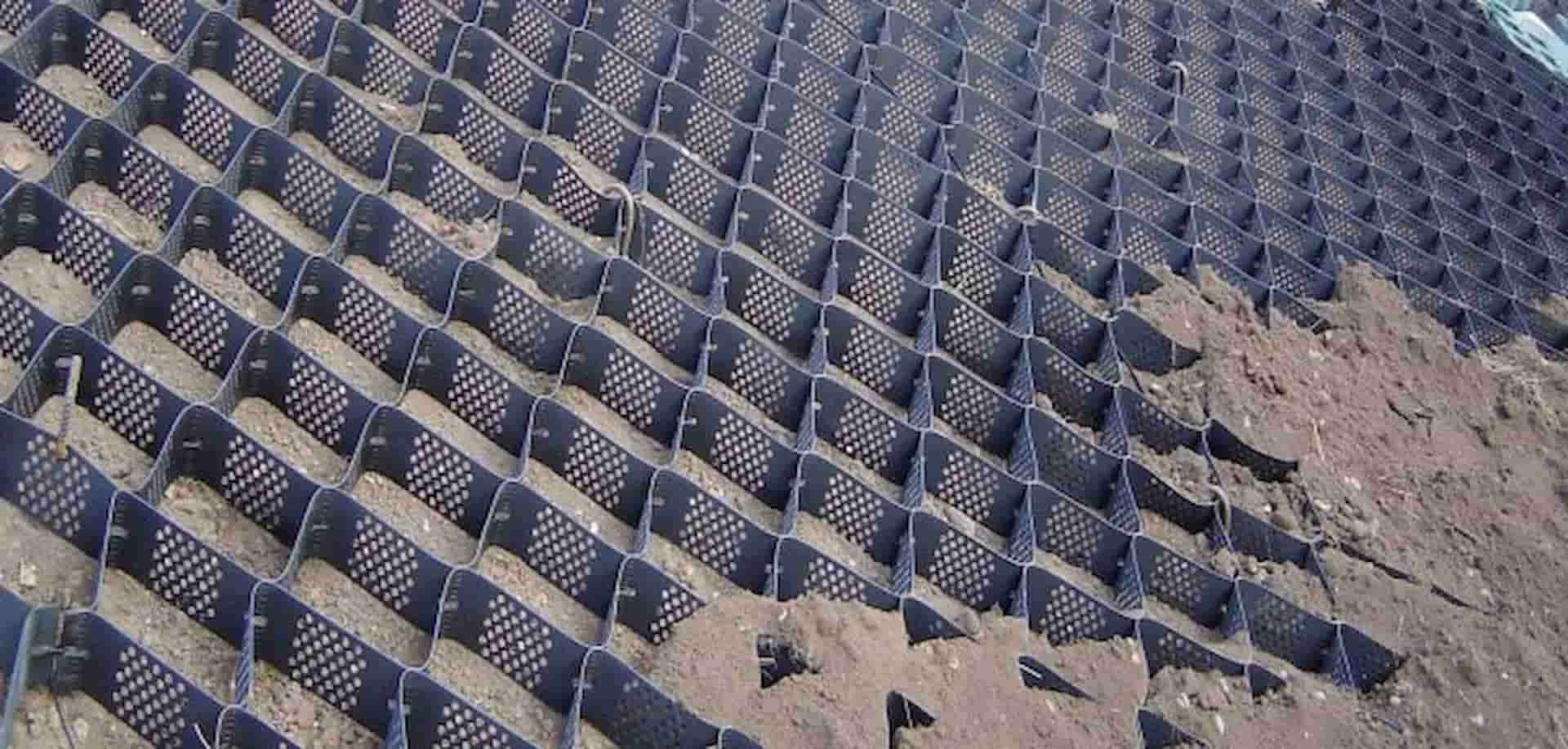
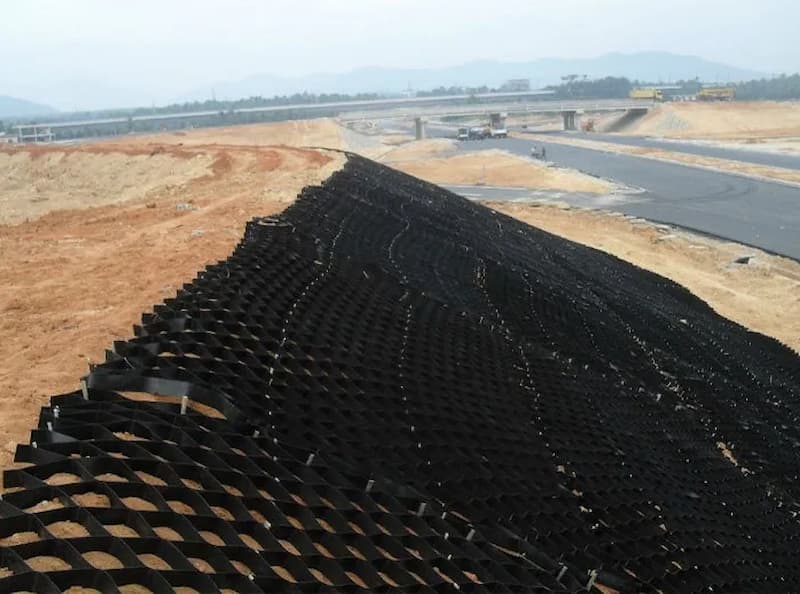
Geocells are three-dimensional honeycomb-like structures made from high-performance engineering polymers such as polyethylene or polypropylene. On-site, geocell sheets expand to form a connected cellular network which, once filled with local materials (gravel, crushed stone, clayey soil, or engineered aggregates), creates a solid and integrated block.
How Geocells Work:
- Lateral Confinement: Cells prevent the lateral movement of infill particles, increasing the soil’s shear strength.
- Load Distribution: Surface loads are evenly distributed across the infill and cellular network, reducing stress on the subgrade.
- Soil Stiffening: The combination of infill and cell structure increases stiffness and modulus, reducing localized settlements.
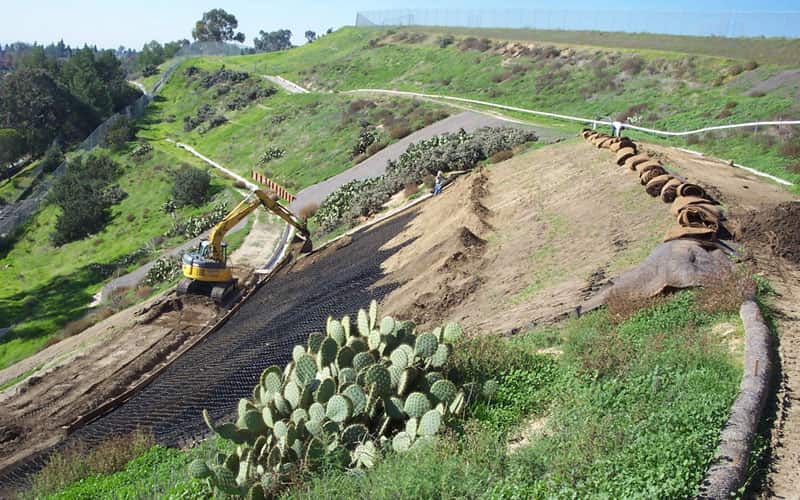
- Erosion Control: On slopes, geocells combined with vegetation or surface material prevent soil washing by water.
Technical and Economic Advantages of Geocells
- Enhanced stability and shear strength by confining soil particles and preventing slippage.
- Reduced structural thickness and subgrade costs due to efficient load distribution.
- Compatibility with local materials, lowering transportation and material costs.
- Quick and easy installation with lightweight, foldable, and portable sheets.
- Durability and resistance to environmental factors such as corrosion, UV exposure, and freeze-thaw cycles.
- Environmentally friendly and visually compatible, suitable for green roofs and slope stabilization.
- Design flexibility for various loads and soil conditions, from gentle slopes to heavy traffic roadbeds.
Applications: Slopes, Roads, and Green Roofs
1. Slope Stabilization
Geocells act as a reinforcing layer in natural or constructed slopes prone to slippage or surface erosion. Filling the cells creates a continuous matrix that enhances soil and root retention. When combined with seeds and suitable soil, geocells significantly reduce erosion on roadside slopes or green retaining structures.
2. Roadbed Reinforcement
In areas with weak soils or medium-to-heavy traffic loads, geocells can distribute surface loads and utilize local infill, reducing the need for thick, expensive subgrade layers. This is particularly useful for rural roads, access routes, and parking areas.
3. Green Roofs
Geocells provide lightweight growing media, controlled drainage, and prevention of slippage on rooftops. The cellular network allows for a lightweight planting substrate with adequate water retention while controlling dead loads. Green roofs with geocells help reduce urban heat islands and promote biodiversity.
Design and Installation: Key Considerations
- Geocell Selection: Based on design load, site conditions, and type of infill, cell size and wall thickness are selected. Shahriar Bespar Arin offers a wide range of products for various applications.
- Subgrade Preparation: Proper leveling, settlement, effective drainage, and compaction are essential before installation.
- Cell Filling: Using appropriate infill materials (gravel, crushed stone, or graded soil) and compacting layers ensures optimal performance.
- Edge Restraints: Locks and edge anchors prevent lateral movement on slopes or under concentrated loads.
- Vegetation Compatibility: Select plant species with suitable root systems for long-term stabilization.
Maintenance and Lifespan
Geocells are durable and low-maintenance. Periodic inspection after heavy rainfall or unusual loading is recommended to correct any settlements or displaced sections. UV-resistant polymers provided by reputable manufacturers significantly extend system longevity.
Environmental and Social Benefits
Geocells reduce the need for quarrying and transporting aggregates, lowering environmental impact. They also enable green roofs and slope landscaping, improving air quality, regulating temperature, and increasing urban green spaces—benefits for planners and local communities.
Shahriar Bespar Arin Company
Shahriar Bespar Arin, focusing on high-quality geocell sheets compliant with engineering standards, is recognized as Iran’s largest geocell manufacturer and supplier. The company provides a range of products with different grades, cell sizes, and wall thicknesses, suitable for road construction, slope stabilization, green roofs, and parking lots. Technical support, installation training, and engineering solutions are among the benefits of collaborating with an experienced and knowledgeable manufacturer.
Conclusion: Geocells – Innovative Soil Stabilization and Erosion Control
Geocells represent a practical revolution in soil engineering and erosion control. They provide excellent mechanical performance, reduce costs, and offer environmentally sustainable solutions. From stabilizing steep slopes and strengthening roadbeds to creating lightweight, durable green roofs, geocell applications are extensive and effective. Selecting quality products and professional consultation, such as working with Shahriar Bespar Arin, ensures successful implementation and long-term sustainability in various projects.